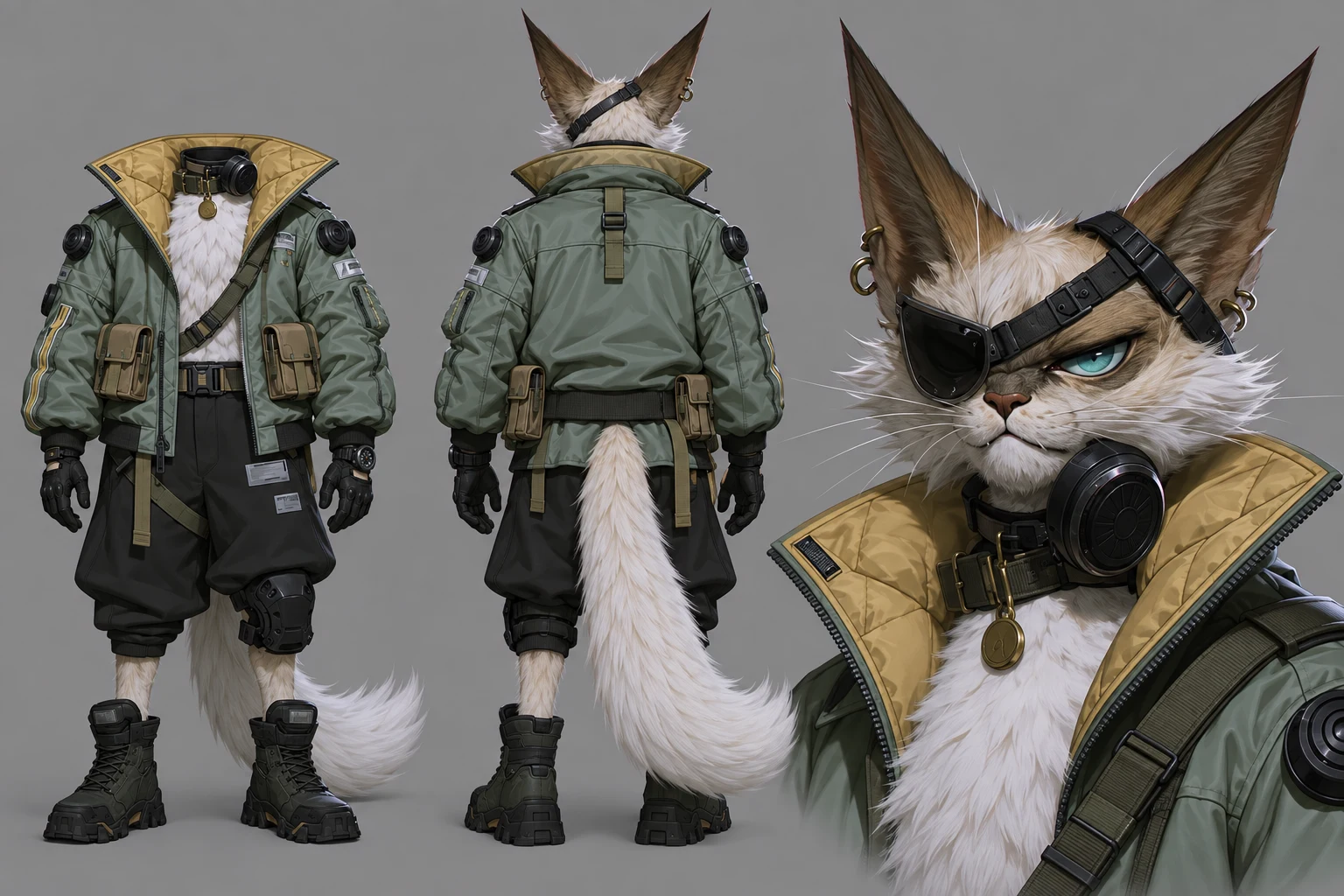
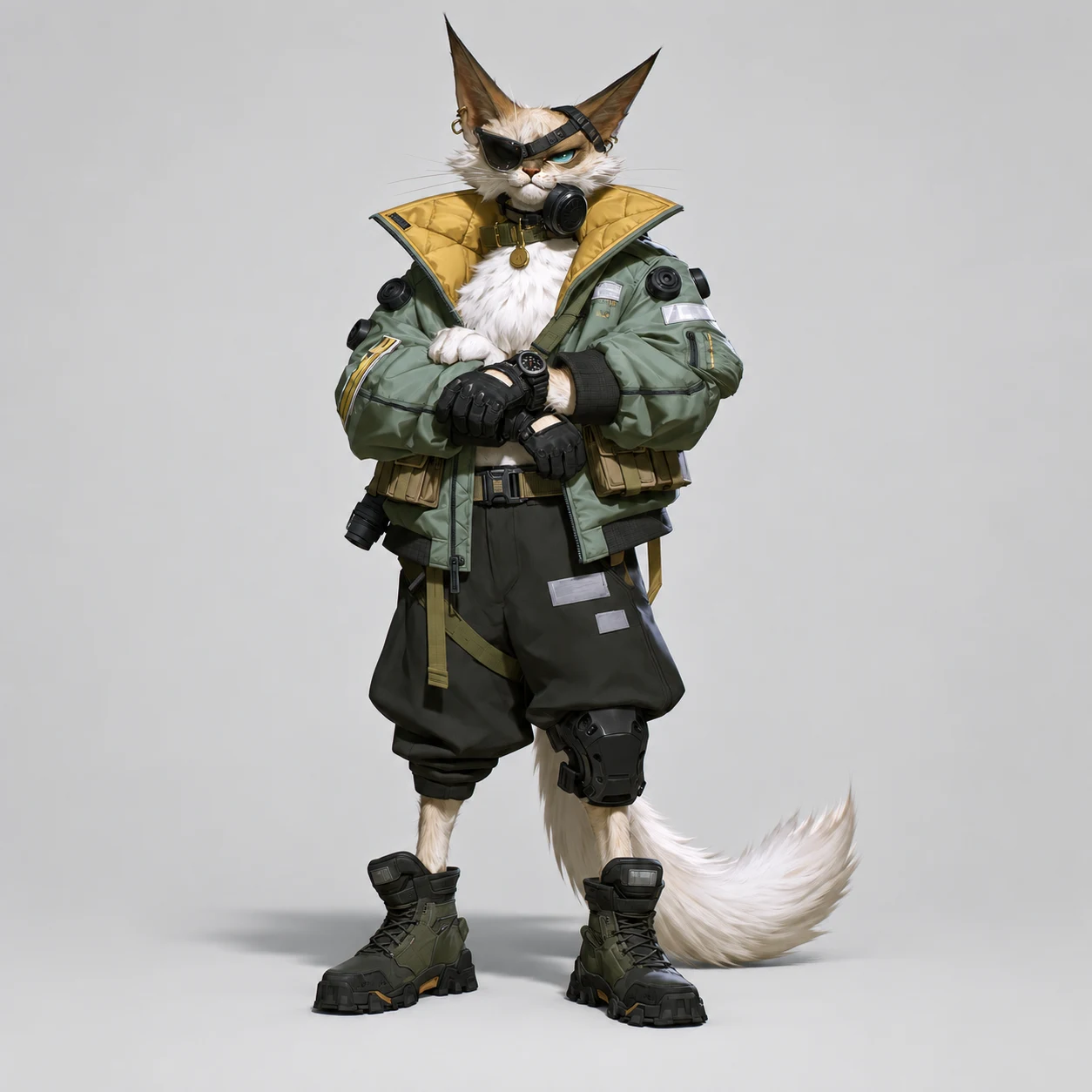
Create a front full-body view, a back full-body view and a three-quarter facial close-up of the reference character. Omit the head from the front body view; retain the head in the back view to support character consistency. For facial reference, note that relying solely on a neutral expression can allow tooth shapes and jaw movement to change whenever the character smiles. Use a plain neutral-gray background and soft lighting with no strong shadows or highlights.
Analyze the reference character and identify areas cropped by the frame or hidden behind other elements. Generate a complete full-body character image, plausibly reconstructing missing limbs, hidden clothing, cropped head or feet, and other occluded parts. Match the visible design exactly in style, palette, materials and design language. Preserve the original pose. Show the entire character from head to toe, including all clothing and held objects. Output a high-resolution, clean image ready for use as a character asset.
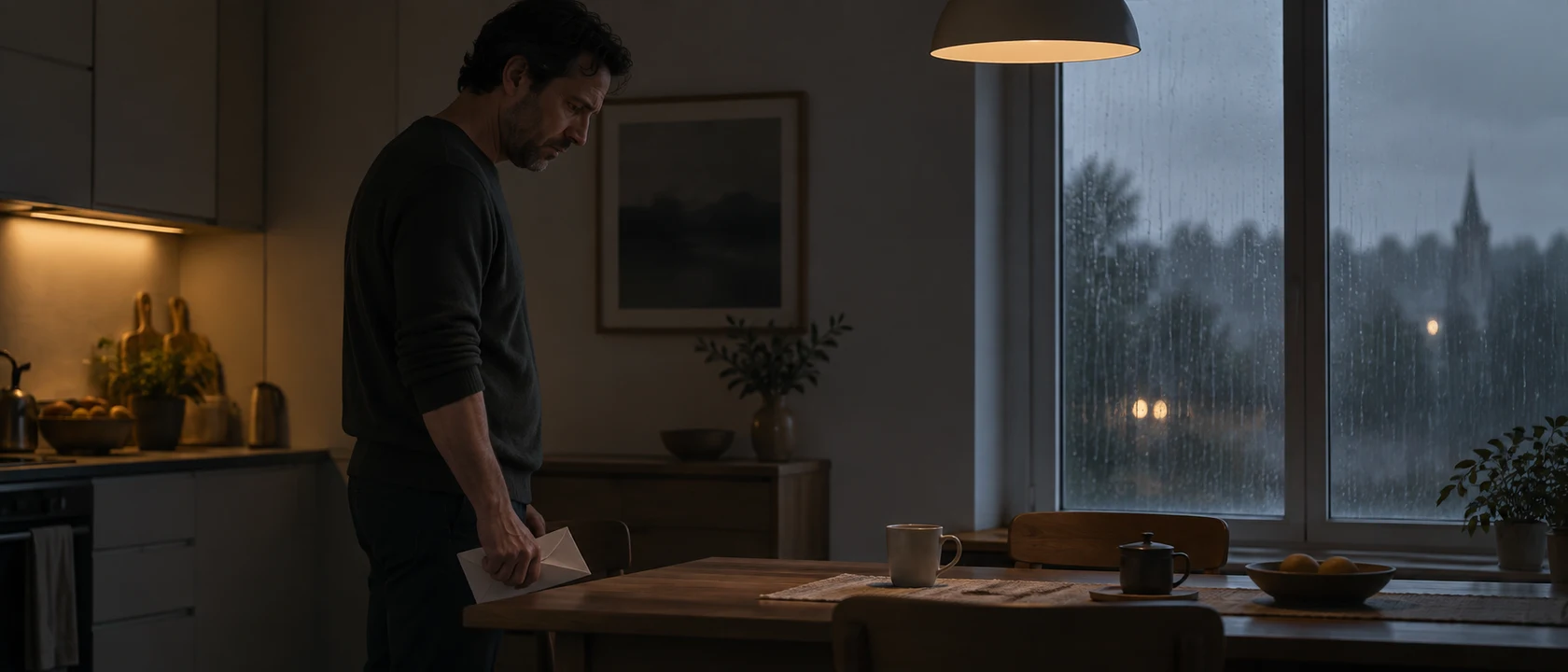
Rewrite the supplied text in Hemingway's style. Strictly limit adverbs such as “very,” “quickly” and “sadly.” Prefer strong verbs and concrete nouns; describe actions and details instead of summarizing emotions. Avoid meaningless decorative adverbial phrases and complements. Minimize adverbs that directly explain emotion, manner or degree. Express meaning through precise verbs, specific actions, sensory details, environmental changes and character reactions. Do not explain what can be shown visually. Necessary adverbs of time, logic, frequency and degree may remain.
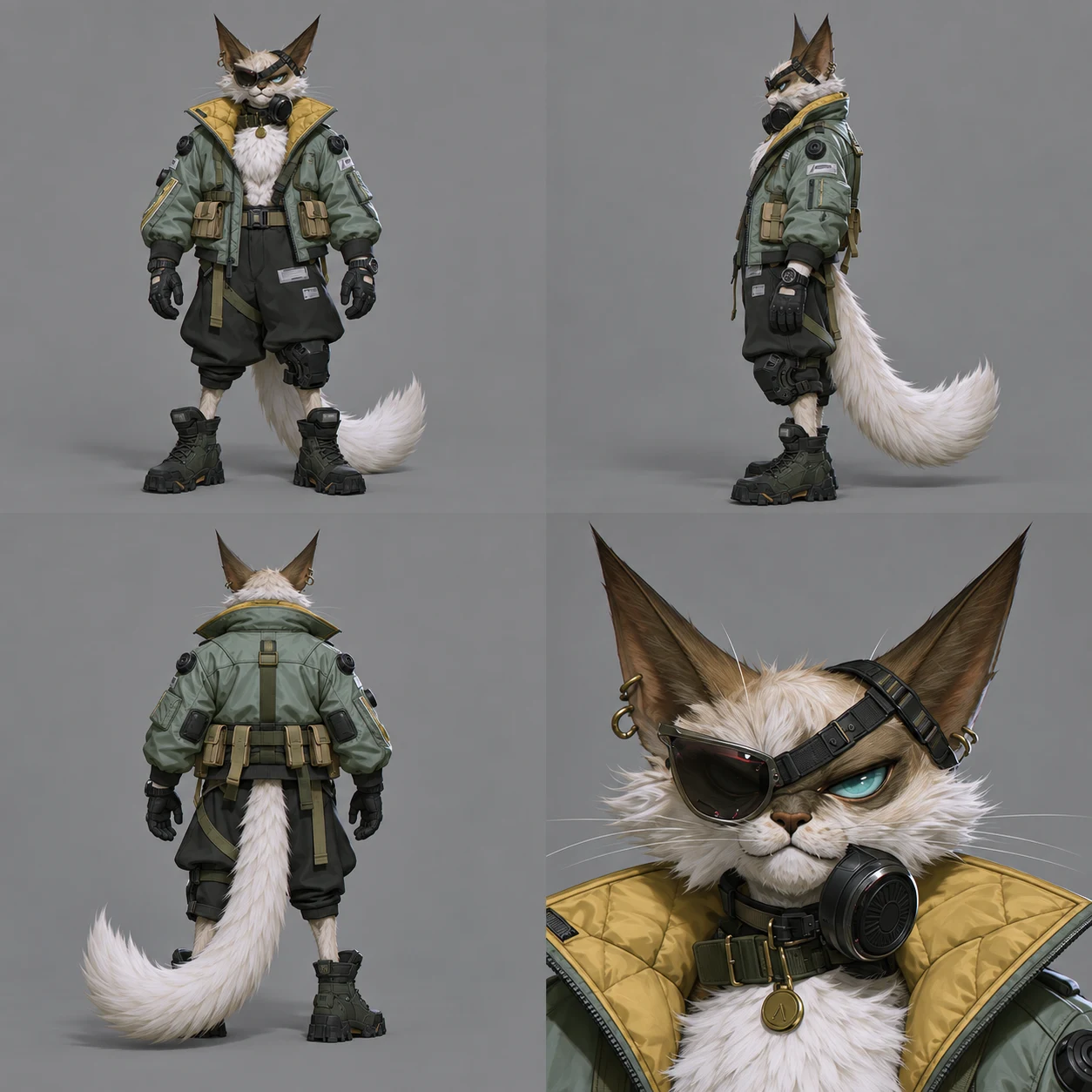
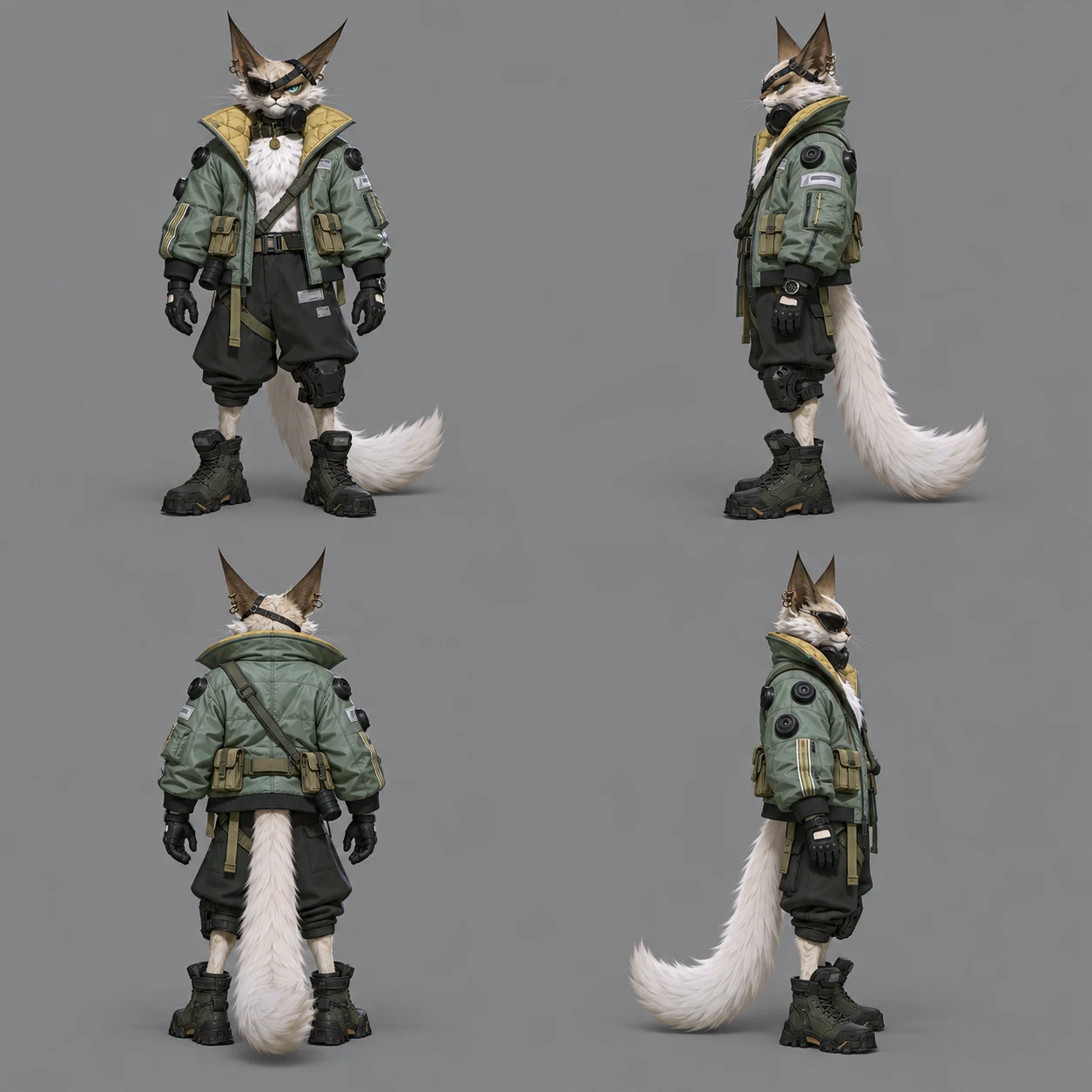
Based on the reference, create three orthographic views plus a detail close-up. A 1:1 or 9:16 composition and 4K clarity are suggested.
SIZE AND LAYOUT: Preserve the source aspect ratio and double its resolution. Divide the canvas into four equal quadrants without visible dividers, borders, labels or decoration. Center one subject in each quadrant: top left front (0°), top right left side (90°, facing left), bottom left back (180°), bottom right a key design detail. For a character, show facial features and hair; for an object, core structure and materials; for architecture, facade details and surface texture.
CONSTRAINTS: The first three views must show the entire subject, including head and feet, roof and foundation, or all object parts. No cropping or overflow. Center each subject with at least 10% of the quadrant width as safety margin on all sides. Use identical scale and visual height in all three complete views.
SURFACES: Preserve every original material detail, texture, pattern, color and ornament without additions, omissions or redesign. Use 4K-equivalent texture fidelity and consistent palette, materials, structure and design language across views.
PRESENTATION: Plain neutral gray #888888 background, no environmental reflection interference, subtle contact shading for volume. A clean, precise, high-resolution professional reference sheet.
Based on the reference, generate a four-view presentation. A 1:1 or 9:16 composition and 4K clarity are suggested.
SIZE AND LAYOUT: Preserve the original aspect ratio and double the resolution. Divide the image into four equal quadrants with one centered subject per quadrant. No dividing lines, borders, labels or decoration. Top left: front (0°). Top right: left side (90°, facing left). Bottom left: back (180°). Bottom right: right side (270°, facing right). The two side views must face opposite directions, never the same direction.
CONSTRAINTS: Center each subject and retain a safety margin of at least 10% of the quadrant width on all sides. Exactly one subject per quadrant.
SURFACES: Reproduce all original materials, textures, patterns, colors and accessories without adding, omitting or changing design elements. Use 4K-equivalent texture fidelity. All four views must retain identical palette, materials, structural details and design language.
PRESENTATION: Plain neutral gray #888888 background, no environmental reflection interference. End component boundaries with clean geometric cut surfaces. Components float centrally without a base, with subtle contact shadows for volume and ample negative space for reading silhouettes.
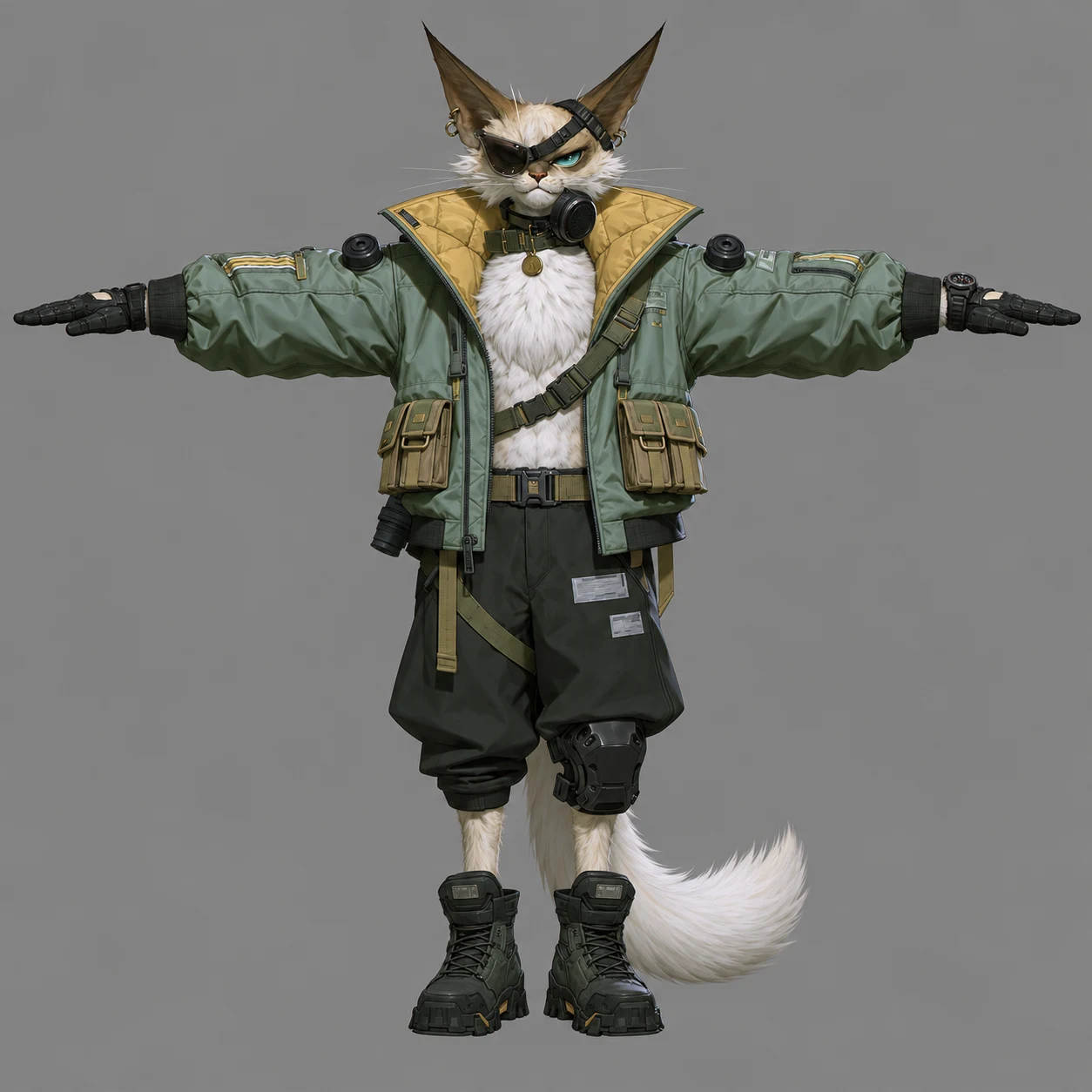
Generate a 1:1 square image. Adjust the reference character to a standard T-pose for 3D modeling: both arms extend straight sideways at shoulder height, palms downward, legs straight and together, feet flat. Maintain correct anatomical proportions and symmetry. The pose must be rigid and still for rigging. Preserve all original clothing, accessories, lighting and artistic style; change only the body pose. Use a plain gray #888888 background with no environmental elements.
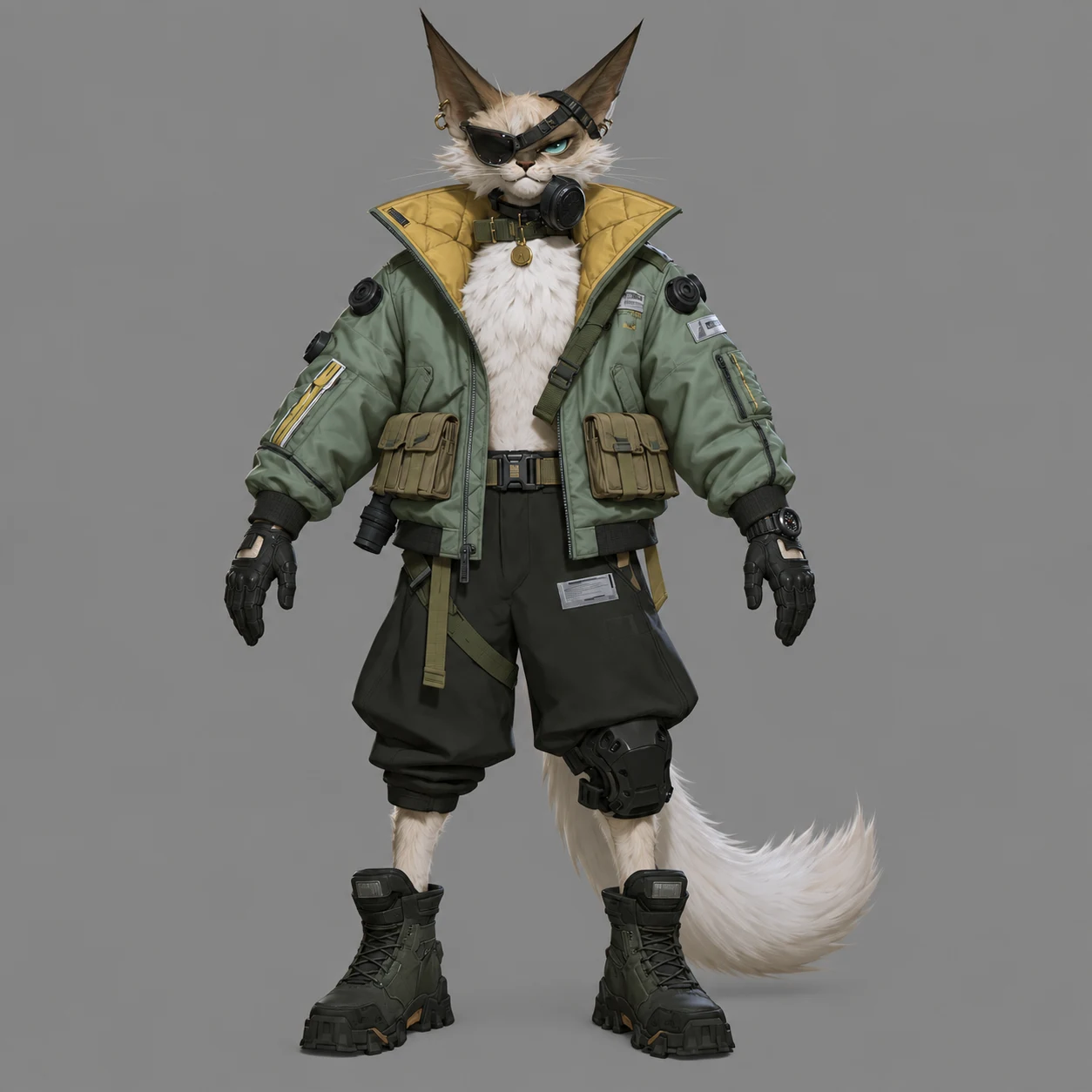
Generate a 1:1 square image. Repose the reference character in a standard A-pose: arms straight, extending downward at approximately 45° to the body; legs separated at shoulder width. Preserve all original clothing details, hairstyle and facial features. Use a plain gray #888888 background with no environmental elements.
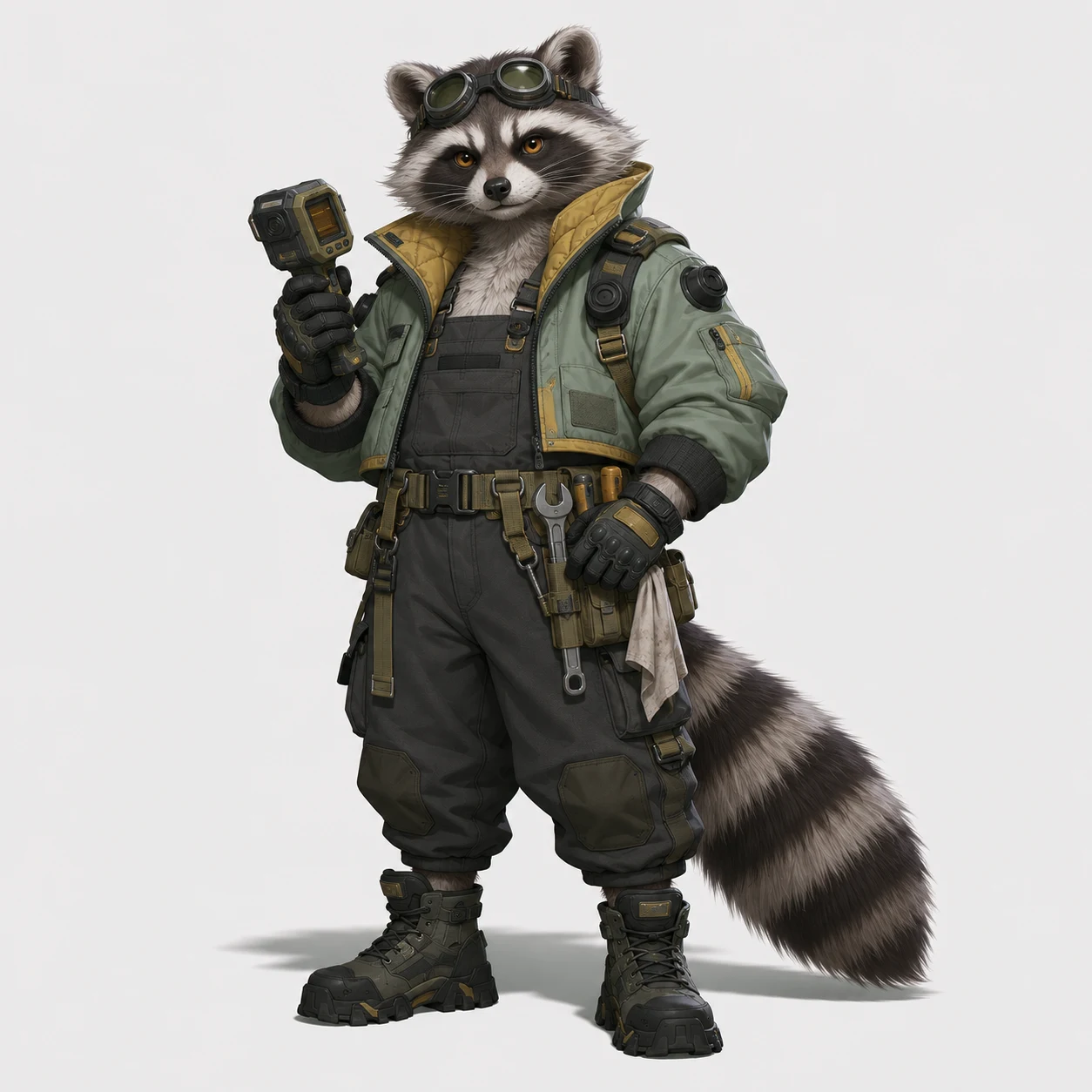
Analyze the reference's visual style: art direction (realistic, flat, cyberpunk, watercolor, pixel art, etc.), palette logic, brushwork or rendering texture, lighting treatment, composition and atmosphere. Using this style DNA, generate an original derivative image with a related but different subject: another character in the same world, another scene in the same style, or another object in the same series. It must immediately read as part of the same series, world or creator's style while remaining genuinely new and creatively independent. Match rendering quality, detail density and production precision. Keep palette, lighting language, material feel and atmosphere highly consistent with the reference. Output a high-resolution image with independent aesthetic and creative value.
资产 · 示例
09
图片转灰模
资产
统一灰色材质,保留几何结构,用于建模观察。
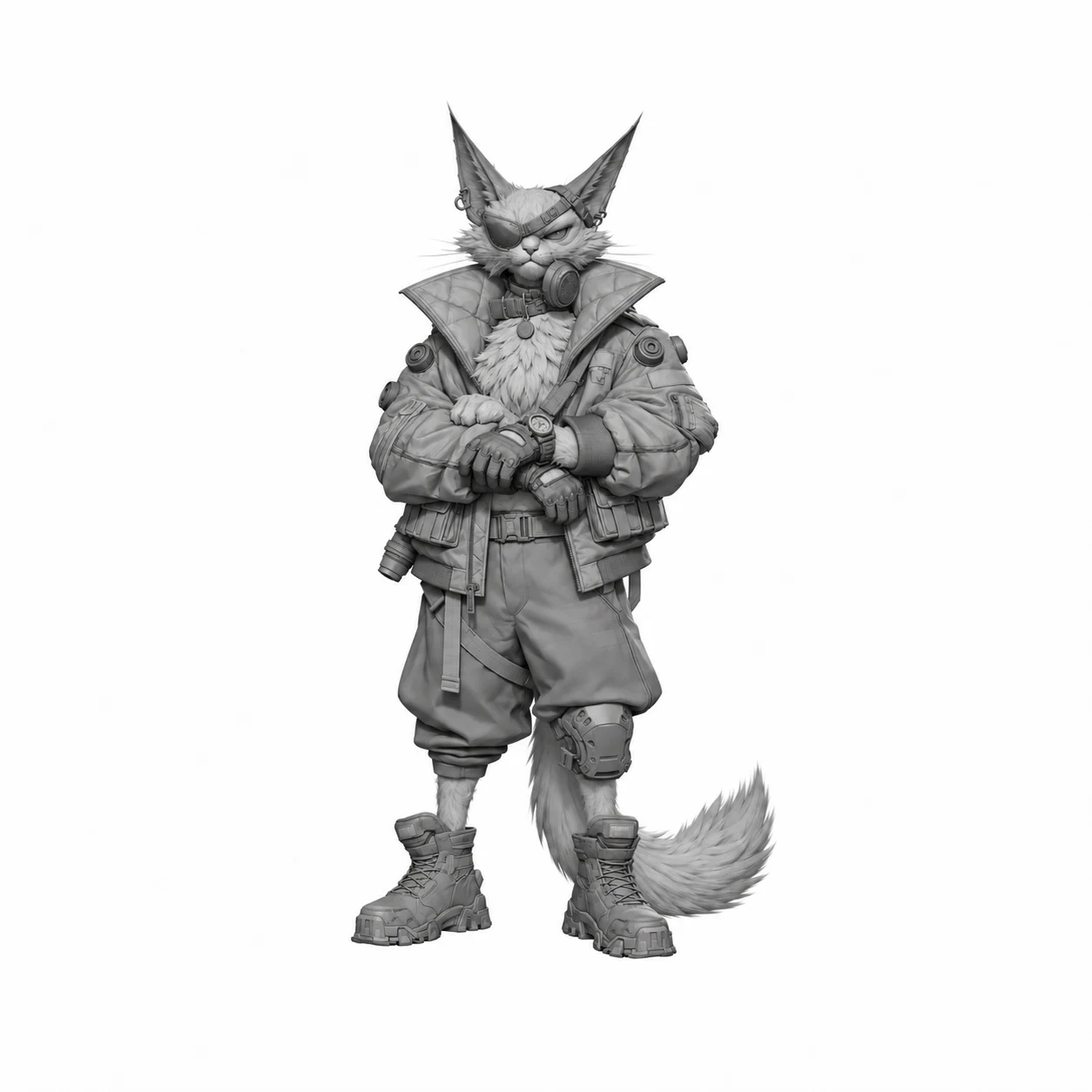
/根据参考图中的角色/物体,图片转灰模:生成一张适合3D建模参考的数字灰模渲染图(digital sculpt render / ZBrush gray model presentation);
【材质定义】
整体转化为统一的中性灰色无材质实体模型外观(neutral gray clay render),如同ZBrush中MatCap Gray材质球的渲染效果;表面为哑光灰色(约#808080中灰),无任何贴图、色彩、纹理映射或表面涂装;所有设计信息仅通过几何体积、结构转折与表面起伏传达;质感对标数字雕刻软件中的高模细分曲面渲染(subdivision surface render);
【几何细节保留】
完整保留原始设计的所有三维几何信息:服装褶皱的厚度与层叠穿插关系、毛发的体积分组与走向结构、配饰的硬表面轮廓与倒角细节、装备/武器的机械结构与布尔切割痕迹、肌肉/身体结构的体块衔接与骨点起伏;细节精度对标ZBrush百万面高模雕刻水准(high-poly digital sculpt, millions of polygons),可清晰辨认每一处结构转折的硬边与软边过渡;
【光照方案——均匀立体照明】
采用数字雕刻软件标准三点布光方案:正前方偏上主光(key light)提供整体可读性,左右两侧对称补光消除死黑区域,确保模型任何结构面都能被照亮并可辨认;光照均匀但保留足够的明暗梯度以突出体积感和结构细节;无硬投影、无高光爆点;明暗过渡平滑自然,类似ambient occlusion与均匀方向光叠加的效果;目标是让每一处凹凸、每一条结构线都清晰可读,服务于建模师观察参考;
【背景与环境】
纯白色背景(#FFFFFF),无渐变、无环境元素、无地面反射、无网格;模型灰色外观与纯白背景形成清晰的轮廓分离;
【画面品质】
高分辨率数字渲染输出,对标ZBrush/Blender中专业灰模展示的BPR渲染或Cycles clay render截图;画面干净锐利,无噪点、无光斑、无镜头畸变、无后期滤镜;整体观感如同数字雕刻师的高模作品集展示图(portfolio sculpt presentation);
【禁止出现】
不要出现任何色彩、材质贴图、皮肤质感、环境反射、HDRI环境光映射、地面阴影、景深模糊、线框叠加、戏剧性打光、背景装饰物、文字水印。
替换主体后即可复制。
英文提示词
Convert the reference character or object into a digital sculpt render suitable for 3D modeling reference, like a ZBrush gray model presentation.
MATERIAL: Uniform neutral gray clay, similar to MatCap Gray, matte medium gray around #808080. No textures, colors, texture mapping or paint. Express all design information through geometric volume, structural transitions and surface relief, with high-poly subdivision-surface quality.
GEOMETRY: Preserve all original 3D design information: thickness and overlapping layers of clothing folds; hair volumes and directional groups; accessory hard-surface silhouettes and bevels; mechanical structure and Boolean cuts of equipment or weapons; muscle volumes, body transitions and bony landmarks. Match million-polygon ZBrush sculpt fidelity, with readable hard-to-soft edge transitions.
LIGHTING: Even volumetric sculpting illumination: an upper-front key for readability and symmetric side fills to avoid unreadable black areas. Retain enough tonal gradient to describe form. No hard cast shadows or blown highlights. Smooth shading resembling ambient occlusion combined with even directional light. Every recess, ridge and structural line should be readable for a modeler.
BACKGROUND: Pure white #FFFFFF, no gradient, environment, floor reflections or grid. Clear silhouette separation.
QUALITY: High-resolution professional BPR or Cycles clay-render presentation, clean and sharp, no noise, light artifacts, lens distortion or post-production filters.
EXCLUDE: Color, material textures, skin shading, environmental reflections, HDRI mapping, ground shadows, depth-of-field blur, wireframe overlays, dramatic lighting, background decoration, text and watermarks.
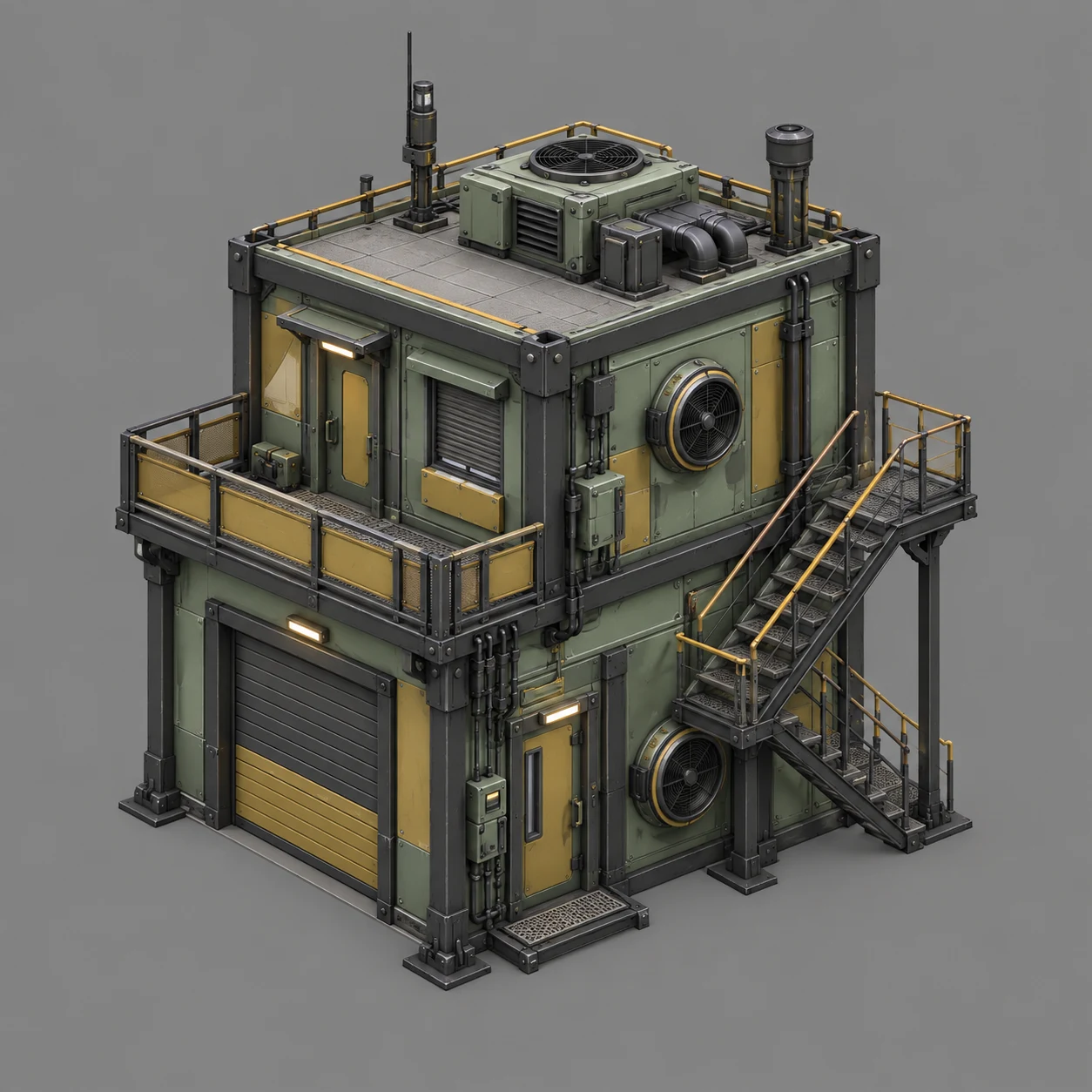
Identify and extract the reference building, including directly attached structures such as balconies, rooftop equipment and external stairs. Convert it into a standard 30° isometric architectural visualization. Remove all environmental background: sky, streets, vegetation, vehicles and people. Retain only the building. Match the reference rendering style exactly: photorealistic remains photorealistic, stylized 3D remains stylized 3D. Do not switch to hand drawing or another style. Use soft global illumination and mild ambient occlusion to clarify structural layers, avoiding strong shadows that obstruct readability. Show the complete building without cropping and with appropriate margins. Use a plain gray #888888 background, no ground texture, sky or environmental elements.
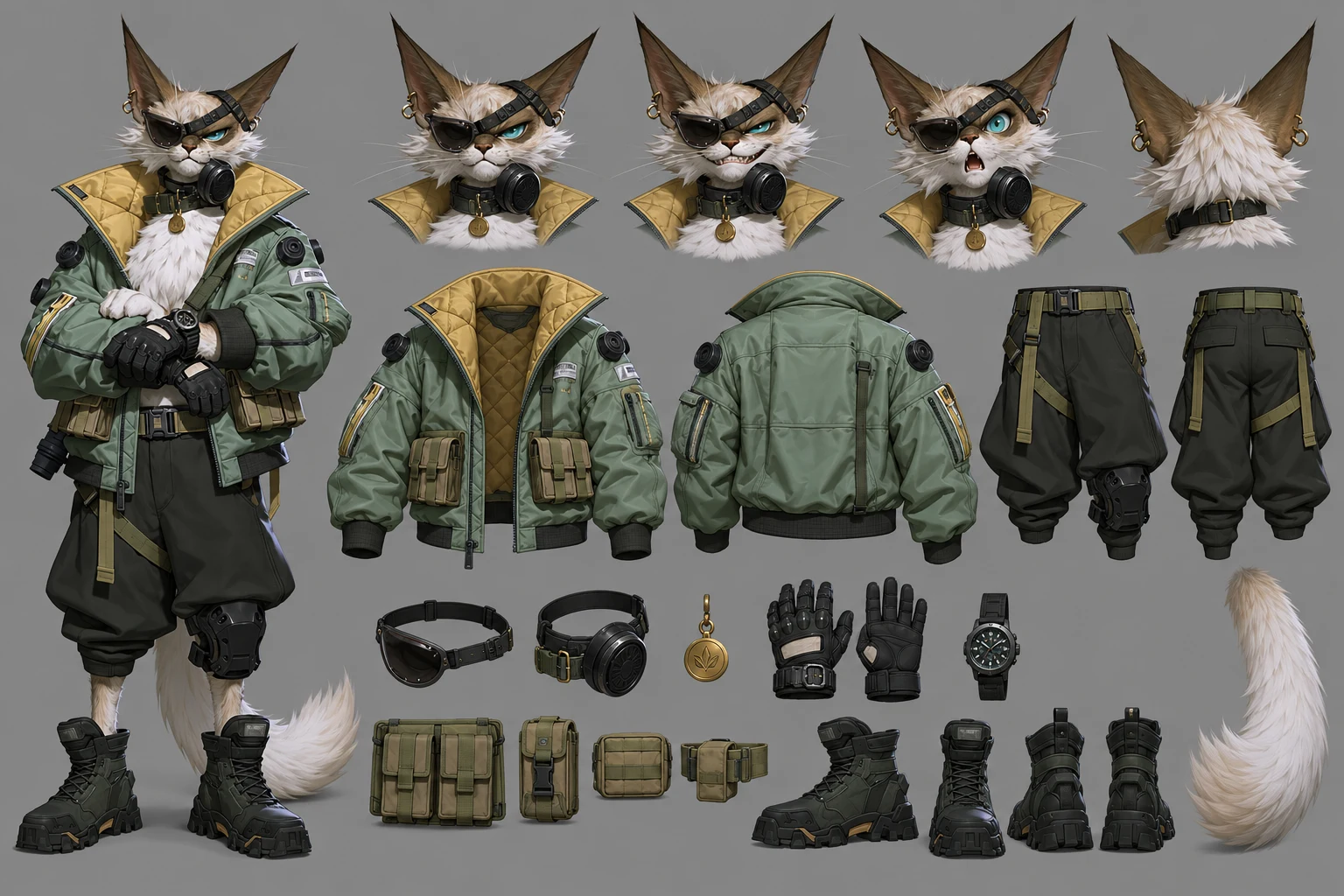
Based on the reference character, generate a character design breakdown sheet. Display components separately, including hair and head details, two or three representative facial expressions, separate upper garments, lower garments and footwear, individual weapons, props and accessories, and enlarged special emblems or patterns. Leave annotation space beside each component, as in a professional design book. Match the character's original colors, materials and style in every part. Distribute components in a clear, orderly scattered layout with appropriate spacing and no overlap. Use a plain gray #888888 background with no environmental elements. Follow professional game or animation character-design documentation standards: high-resolution, precise and clean.
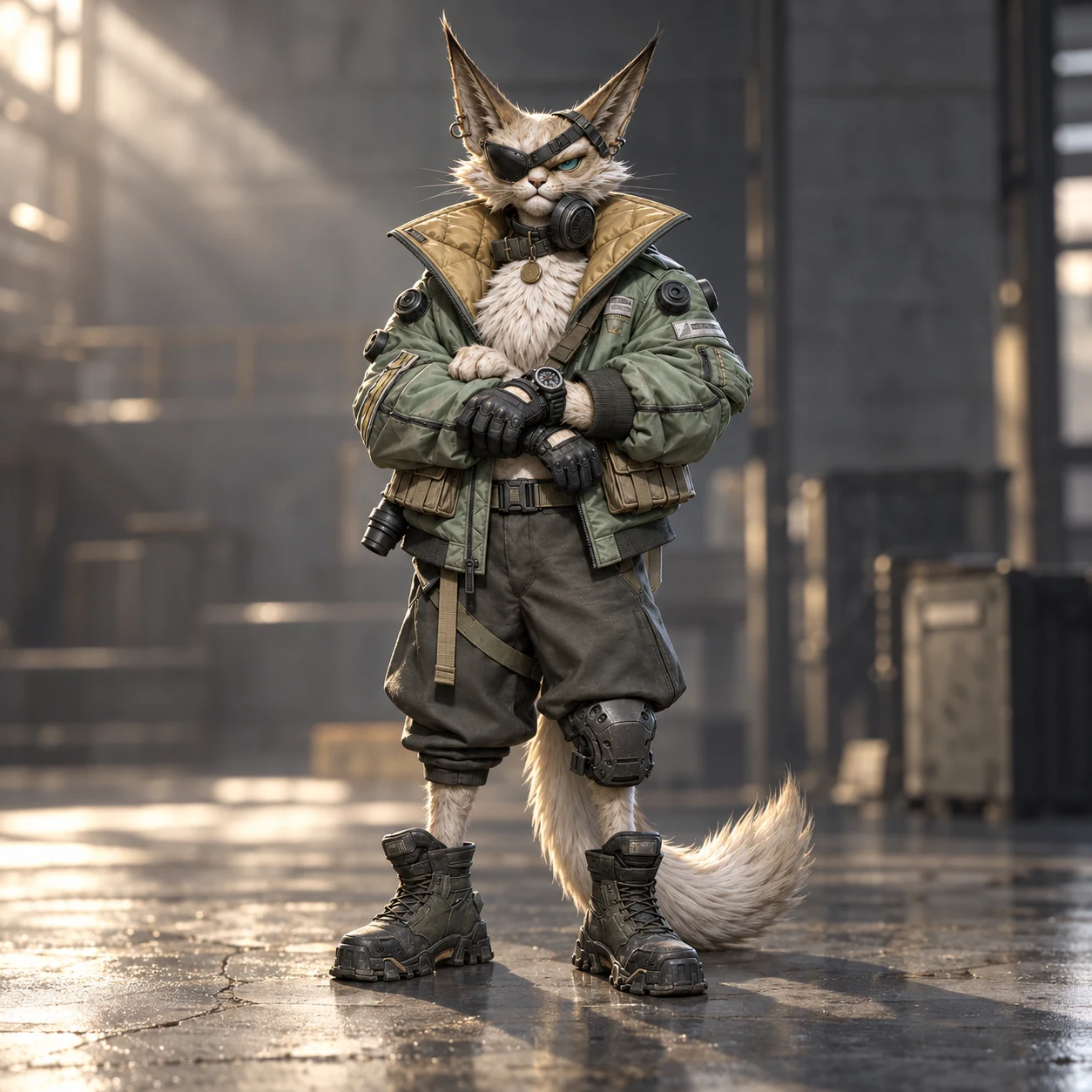
Turn the supplied white model into an ultra-photorealistic professional render. Strictly preserve its geometry, structural proportions, spatial relationships and design details; add only realistic materials, lighting and atmosphere.
MATERIALS: Infer physically appropriate materials for every recognizable component from function and design semantics, such as metal, glass, wood, fabric, concrete, plastic, leather or stone. Provide reflectance, roughness, refraction, subsurface scattering, micro-surface detail (scratches, texture, pores or granularity) and natural wear. Materials must have plausible real-world physical behavior and thickness.
LIGHTING: Physically based global illumination, with a directional key at a natural color temperature and soft environmental fill. Continuous natural transitions. Accurately render reflection, refraction and scattering: clear environment mapping on metal, diffuse response on rough surfaces and correct caustics for transparent or translucent materials. Use realistic soft/hard shadow variation and contact detail.
ENVIRONMENT: An appropriate context for the object's or scene's function, supplying plausible light and reflection without dominating the subject. Moderate background depth of field, correct ground contact and reflections, natural aerial perspective and subtle atmospheric scattering.
QUALITY: Top-tier commercial rendering: ultra-high resolution, fine anti-aliasing, natural tone mapping, subtle vignetting and chromatic aberration, precise exposure, very low noise, high detail resolution and clean edges. Aim for photographic realism indistinguishable from a real photograph.